


Case study analysis - Ant Forest
- lfei557
- Mar 18, 2022
- 3 min read
- Location: Hangzhou, China

Alipay Ant Forest is one of China’s most influential environmental protection projects. As a globally popular online payment platform, Alipay has been promoting climate action with the help of its digital technology since August 2016. On Alipay’s mobile app, the ‘Ant Forest’ project allows users to earn “green energy points” every time they take steps to reduce their carbon footprint. For example, biking to work, going paperless and buying sustainably produced goods. As a result, the “green energy points” that the user earns are used to create a virtual tree on their app. And then, Alipay partnered with non-governmental organizations to plant a real tree or protect a conservation area.
Context : The world faces challenging environmental issues, which are well known. As a result of increasing pressure on the environment, ecosystems suffer severe damage, and millions of lives are at risk. Different from other ecological organizations, Alipay Ant Forest uses the bottom-up approach. This project involves the public directly in behavioral change and green financing. Moreover, this project complements the top-down climate action initiatives led by governments and non-governmental organizations.
Goals : To combat land degradation, the Chinese government plans to build 4,500 kilometers of the “Green Great Wall” along the boundaries of the north Chinese desert. By supporting this plan, the Ant forest project aims to plant millions of trees in China to make China greener. Assuming it meets its target, by 2050, the forest area will cover more than 42% of China’s land surface.

Main stakeholders :
GaGo Group (Remote sensing satellites Support) Use remote sensing satellites to take images of the desert regions before and after the tree planting to show users how their everyday actions can positively impact the planet.
X-aircraft (Intelligent monitoring Support) Use drones to take photos and send them back every day. It is possible for tree managers to accurately quantify the changes in tree numbers as well as their health status. Additionally, users are able to track the growth of saplings on their mobile phones
Local farmers (Tree-planters) The ant forest has a large demand for tree-planters, so more than 400,000 local farmers have joined the ant For- est program. As people who plant trees, their participation undoubtedly increases the feasibility of this project.
Freshippo (Supermarket) To encourage users to participate in Ant Forest, consumers will receive green energy points when they opt out of plastic bags after shopping. Led by Freshippo Supermarket, more supermarkets joined to support Ant Forest No Plastic Bag Program.
Positive Impact :
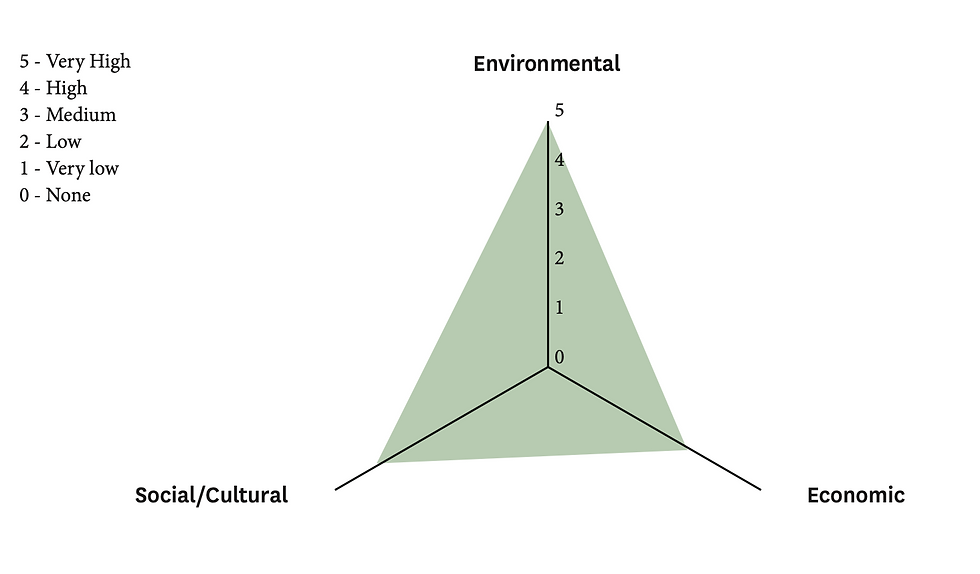
Social/Cultural ( 4/5 ) Through Alipay Ant Forest, everyone in society can participate in local and global problem-solving. Now, the Alipay Ant Forest now has over 500 million users. As more users use Alipay Ant Forest app, a large number of people are learning about the impact of climate change. For society as a whole, Ant forest helps China become a global leader in re-greening and serves as a model for other tree-planting policies.
Environmental ( 5/5 ) In Alipay Ant Forest, the effect of carbon reduction is double-counted. More than 500 million users join in growing a virtual tree in Ant Forest, which helps to reduce emissions and enable a low-carbon lifestyle. Also, more than 100 million trees were planted on 112,000 hectares in northwest China and have protected 12,000 hectares of conservation land. As part of the fight against climate change, real trees play a vital role in preventing soil erosion and controlling desertification.
Economic ( 3/5 ) The Alipay Ant Forest is not just beneficial for some of the biggest retailers and technological companies, but it also helps local farmers make a living from the green economy. By working with farmers to grow trees, develop organic agricultural products, and establish e-commerce relationships, Alipay Ant Forest has created about 400,000 jobs and earned RMB 60 million (NZD 13.9 million).
System map shows how does it work :

Based on the above case study, there are some suggestions for the future development of Ant Forest:
1. Tourism
Tourism can be developed in the tree-planting area, boosting the local economy and increasing the visibility of the Ant Forest project. In addition, visitors can intuitively feel the land changes after planting trees.
2. Agricultural products
In addition to planting trees to prevent the land loss, you can also grow crops where the land situation allows, which can lower local vegetable prices and increase revenue.

Comments